
Focus keyphrase: Durham Region property management
Meta description: The Foundry District will add 509 rental homes to downtown Oshawa by late 2029. Learn how Durham landlords should respond now.
The next three years will give owners time to prepare for a major change in the Oshawa rental market. For anyone involved in Durham Region property management, Medallion Corporation’s August 20, 2026 groundbreaking for The Foundry District is the development to watch.
Phase 1 will add 509 purpose-built rental homes at 119 and 151 Bruce Street. The project includes a 10-storey building and a 23-storey tower. Of the total, 153 homes, or approximately 30%, are designated as affordable. Additional rent-geared-to-income homes are also planned.
Leasing is expected to begin in late 2029. That date is not close enough to justify waiting, but it is close enough to shape your capital, leasing and retention decisions today.
What The Foundry District will add to Oshawa
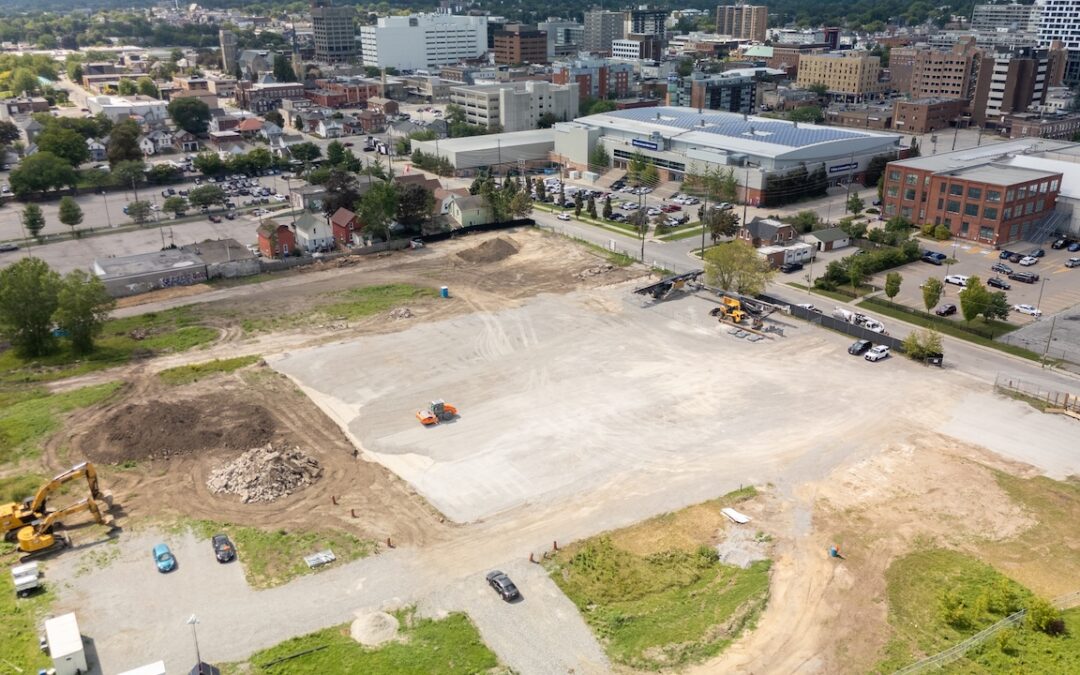
The first phase is part of a 23-acre master-planned redevelopment on the former Fittings Limited industrial site. UrbanToronto identifies the broader site as 135 Bruce Street, while the first-phase buildings are referenced at 119 and 151 Bruce Street.
The project is supported by $188 million in government financing and other public-sector support through:
- CMHC’s Apartment Construction Loan Program: Financing supporting the construction of new rental housing.
- The Region of Durham’s Regional Revitalization Program: Regional support tied to downtown renewal and housing supply.
- A City of Oshawa grant agreement: Municipal participation in the project’s delivery.
The first phase includes 27 studios, 280 one-bedroom homes, 182 two-bedroom homes and 20 homes with three or more bedrooms. Planned resident features include fitness and wellness areas, work and social lounges, games and theatre rooms, an outdoor terrace and a pet spa.
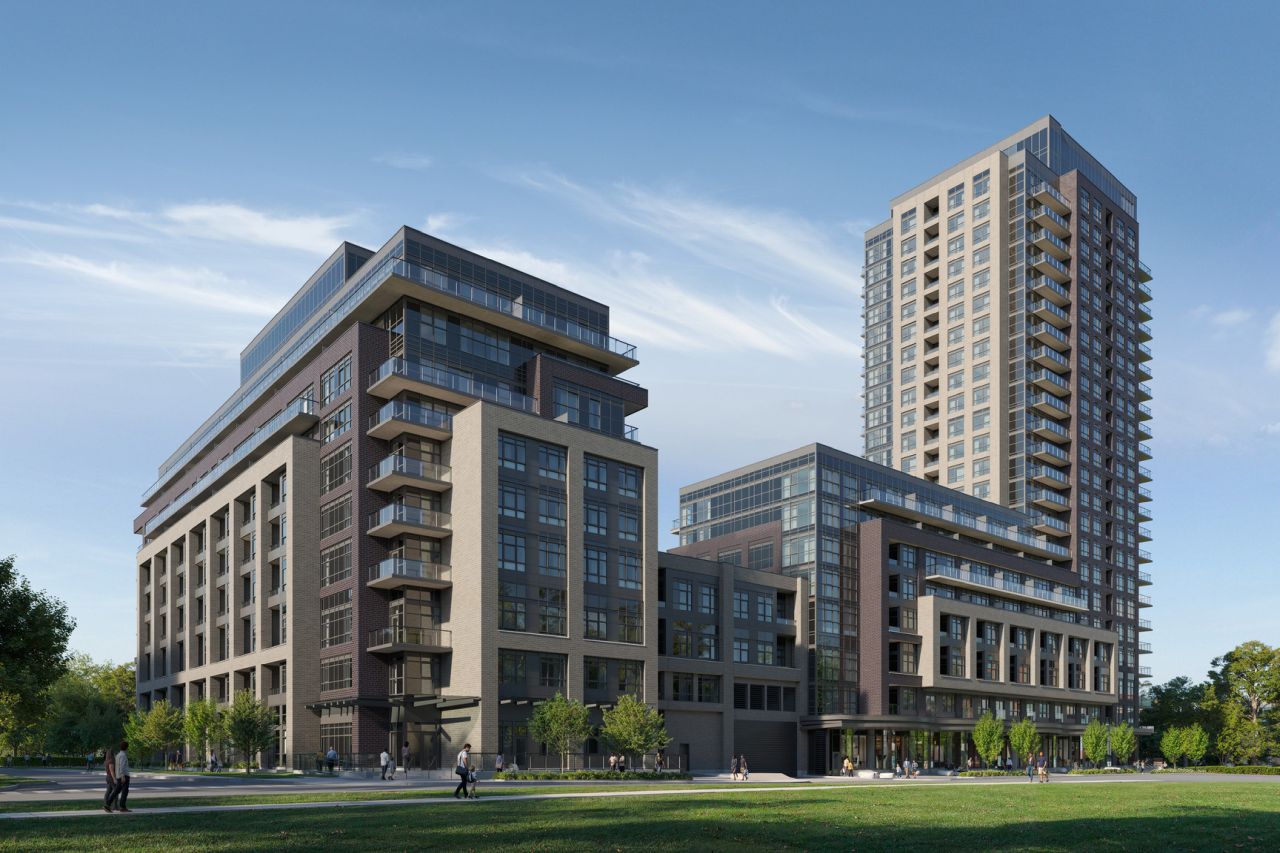
Artist rendering of The Foundry District. Image via UrbanToronto.
The full master plan could eventually include approximately nine buildings and 3,000 rental homes, along with retail, restaurants, new streets and a public park. The timing of later phases has not been confirmed. Owners should underwrite Phase 1 as a defined project, while treating the full master plan as a longer-term possibility rather than an immediate supply shock.
The Oshawa rental market is already moving toward balance
The current market does not need 3,000 new homes to become more competitive. Conditions are already softer than they were during the peak leasing period.
CMHC’s Summer 2026 Housing Market Outlook, published July 22, 2026 and based on data as of June 23, 2026, reports the following Oshawa CMA apartment figures:
- A 3.6% apartment vacancy rate in 2024.
- A 3.7% apartment vacancy rate in 2025.
- A forecast 2026 apartment vacancy rate of 4.6% under the baseline scenario, with a 4.8% alternative scenario.
- A forecast 2027 apartment vacancy rate of 4.8%.
- A forecast 2028 apartment vacancy rate of 3.7%.
- 661 apartment starts in 2024.
- 199 apartment starts in 2025.
- A forecast 2026 apartment-start total of 950 under the baseline scenario, with a 920 alternative scenario.
- A forecast 2027 apartment-start total of 850.
- A forecast 2028 apartment-start total of 880.
These forecasts point to a market where vacancy rises through 2026 and 2027 before easing in 2028, while purpose-built apartment starts rebound sharply in 2026 after a slow 2025.
Our current Durham leasing benchmarks show meaningful differences by submarket:
| Area | Approximate vacancy benchmark |
|---|---|
| North Oshawa | 2.9% |
| Oshawa South and Central | 4.7% |
| Ajax | 3.2% |
| Pickering | 2.0%–2.5% |
| Whitby, including Brooklin | Approximately 2.5% |
| Clarington, including Bowmanville | Approximately 1.8% |
Asking rents also vary by condition, location and layout. Current Oshawa ranges are approximately $1,350 to $1,800 for a one-bedroom and $1,700 to $2,000 for a two-bedroom. These are broad leasing benchmarks, not valuations.
Ajax is showing a similar split by unit type. Current benchmarks indicate that one-bedroom asking rents are down approximately 13% year over year, while two-bedroom rents are up approximately 3.7%. That spread matters. It shows why portfolio decisions should be made by unit type and submarket, not from a single regional average.
What The Foundry District will actually compete for
The new towers will compete most directly for tenants who want:
- A recently constructed building.
- Modern finishes and efficient layouts.
- Professionally managed common areas.
- Indoor and outdoor amenity space.
- A central Oshawa location.
- A new rental experience without the responsibilities of ownership.
That does not mean every existing rental unit is exposed in the same way.
A well-maintained older unit with a practical floor plan, parking, storage, outdoor space or a strong neighbourhood location may remain competitive. A unit with dated finishes, recurring maintenance issues, poor lighting, weak presentation and deferred repairs will face more pressure.
New supply often separates the market. Tenants who are comparing recent construction with older units may accept fewer amenities if the existing unit is clean, functional, fairly priced and well located. They are less likely to overlook visible maintenance problems simply because the rent is slightly lower.
Durham Region property management owners should plan before late 2029
The lease-up date gives owners a defined planning window. Use it to improve the parts of the asset that tenants notice and that operations can support.
Complete a unit-by-unit condition audit. Record flooring, paint, appliances, lighting, plumbing fixtures, windows, heating and cooling equipment, storage and exterior presentation. Separate health and safety requirements from discretionary improvements.
Review renewal and turnover patterns. Identify which units have frequent turnover, extended vacancy or repeated maintenance complaints. Those units deserve attention before a larger supply choice reaches the market.
Build a retention plan. Tenant retention is not only about rent. Reliable repairs, clear communication, clean common areas and accurate expectations can influence whether a qualified tenant renews. Start with tenants who are stable, pay on time and occupy units that would be costly to re-lease.
Set capital priorities by payback. Do not renovate every unit to the same standard. Compare the expected rent lift and vacancy reduction with the project cost. A targeted bathroom refresh, improved lighting, durable flooring or better entry presentation may produce a stronger return than a high-cost renovation with little effect on achievable rent.
Track leasing data monthly. Monitor inquiries, showings, applications, days on market, approved applications and concessions. Your own leasing funnel can identify weakening demand before a vacancy rate report does.
Position existing units around location and function
An amenities arms race is not a sound strategy for most small and mid-sized owners. A single-family home, duplex, triplex or low-rise building cannot replicate a 23-storey rental community. It does not need to.
Position the unit around the benefits the new towers cannot offer in the same way:
- Lower-density living.
- Private entrances.
- Larger floor plans.
- Yard or patio access.
- Parking convenience.
- Storage.
- Established streets and neighbourhoods.
- Proximity to employment, schools, transit and daily services.
- A quieter building environment.
The right comparison is not “Does this unit have a theatre room?” The right question is “Which tenant is this unit designed to serve, and is the listing making that value clear?”
Photos, measurements and descriptions should be accurate. A well-presented listing helps the right tenant make a decision quickly. It also reduces wasted showings and pricing disputes.
Pricing discipline will matter more as choices expand
A softening market does not always require a large rent reduction. It does require accurate pricing.
Owners should compare their unit with properties of similar:
- Age and construction type.
- Location.
- Floor plan.
- Parking and storage.
- Utilities included.
- Renovation level.
- Maintenance history.
- Lease terms.
- Current availability.
A unit priced at last year’s peak may sit vacant while the owner waits for a tenant who is no longer in the market. Even a short vacancy can outweigh a small monthly rent premium.
For example, a $100 monthly premium produces $1,200 over a full year. Three weeks of vacancy on a $1,900 monthly unit costs approximately $1,330 before marketing, cleaning, repairs or utility costs. Pricing decisions should account for total revenue, not just the advertised monthly figure.
Ontario rent-control rules still require careful planning
Newer rental buildings and existing properties do not always operate under the same rent-control rules. In Ontario, units first occupied for residential purposes after November 15, 2018 are generally exempt from the annual rent-increase guideline. Even where a unit is exempt, landlords generally must still use the correct notice form, provide at least 90 days' written notice, and wait at least 12 months between increases. The exemption and the applicable process depend on the property and tenancy facts. The applicable LTB notice form differs depending on whether the unit is subject to the guideline (generally N1) or exempt from it (generally N2).
Owners should verify the status of each unit before setting renewal increases or turnover pricing. The exemption relates to the unit's first residential occupancy, not to the identity of the current tenant. Selling, re-leasing, or changing tenants does not by itself change a unit's rent-control status, although lawful increases and turnover pricing must still follow the RTA rules. Keep the relevant records and use the Ontario government’s residential rent increase guidance as a starting point. This is an operational issue with legal consequences, so obtain appropriate legal or regulatory advice where the facts are unclear.
The practical outlook for existing Oshawa owners
The Foundry District will add meaningful rental supply, but the effect will be uneven.
The greatest pressure is likely to appear in older, poorly maintained units that are priced close to renovated or newly built alternatives. Properties with reliable operations, clear positioning and targeted upgrades should remain viable, particularly where they offer larger layouts, parking, private outdoor space or a strong location.
The next step is not to copy a new tower. It is to understand your asset’s tenant segment, protect occupancy, control operating costs and invest where the numbers support the decision.
The broader district may also strengthen downtown Oshawa over time. New residents, retail, restaurants, public space and improved activity can increase the area’s visibility. That may create benefits for existing owners, but only if their buildings meet the expectations of the tenants the neighbourhood attracts.
Prepare your portfolio before the supply arrives
Review your Oshawa assets now against three questions:
- Which units would a tenant compare directly with a new one-bedroom or two-bedroom apartment?
- Which repairs or upgrades could improve retention or reduce vacancy?
- Is each unit priced against current competition rather than historical performance?
Olympus Realty Property Management is a family-owned Durham Region firm with 18 years of local experience. Review our About Us page to learn more about our background, and see our Property Management Services page for how we structure management support for investor-owned properties.
To discuss an Oshawa or Durham Region portfolio before the late-2029 lease-up period, call 289-671-9987 or use the Contact page to submit your property details.
This article is general information, not legal advice.